 "I will not have you wearing the cassock in this house!"
For further Church Lady formation, check out the fine example of Mrs Pring in "Bless Me Father."
 "I will not have you wearing the cassock in this house!"
 What would you bring to the monthly parish coffee social during Lent?
 The restoration of the season of Lent was begun in the year when the Holy Father gave back to us the Easter Night. As we now know that in this holiest of all nights we shall be permitted to be reborn in Christ, renewing solemnly, with a lighted candle in our hands, our baptismal vows, we understand more and more clearly the two great thoughts which the Church is developing throughout the whole of Lent: the instruction of the catechumens and the deepening of the contrition of the penitents. Instruction and penance shall become our motto also for these holy weeks.
Instruction — this brings us to the Lenten reading program. The time saved through abstention from movies — and it is astonishing to find how much it is! — will be devoted to a carefully chosen reading program. Every year we should divide our reading into three parts: something for the mind, something for the heart, something for the soul.
Something for the mind: This should mean doing serious research. One year we might work on the history of the Church; another year on the sacraments; or we might carefully study a scholarly life of Our Lord Jesus Christ; or a book on Christian ethics; or the Encyclicals of the Pope; or a book on dogma.
For the soul: This should be spiritual reading of a high order, from the works of the saints or saintly writers. For example, The Ascent of Mt. Carmel, by St. John of the Cross; The Introduction to a Devout Life, by St. Francis de Sales; The Story of a Soul, by St. Thérèse of Lisieux; The Spiritual Castle, by St. Teresa of Avila; The Soul of the Apostolate, by Abbot Chautard; the books of Abbot Marmion, and similar works.
For the heart: According to the old proverb, “Exempla trahunt,” it is most encouraging to read the biographies of people who started out as we did but had their minds set on following the word of Our Lord, “Be you therefore perfect, as also your heavenly Father is perfect.” In other words, to read a well-written biography of a saint (canonized or not) will have the same effect on us as it had once on St. Augustine, who said, after watching saintly people living a holy life: “If he could do it, and she, why not I?”
If every member of a family adopts this threefold reading program and comments on the books he has been working on, a great benefit will be flowing from one to the other as they exchange the spiritual goods obtained from their reading.
[excerpted from Around the Year with the Trapp Family]
 Therese knitted me an official Mrs. Doyle tea cosy as a Christmas present, featured here in an early St Agnes' day tea with Agnesenplatzchen.
 In doing a little spiritual preparation for my August wedding, I encountered the following quote from St Gianna.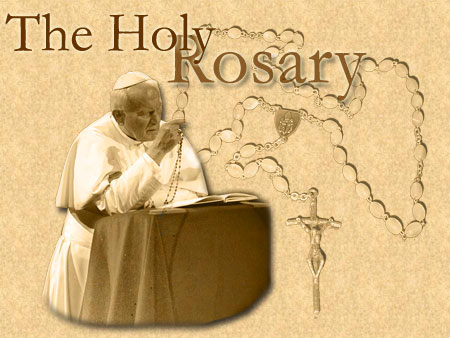
29. Announcing each mystery, and perhaps even using a suitable icon to portray it, is as it were to open up a scenario on which to focus our attention. The words direct the imagination and the mind towards a particular episode or moment in the life of Christ. In the Church's traditional spirituality, the veneration of icons and the many devotions appealing to the senses, as well as the method of prayer proposed by Saint Ignatius of Loyola in the Spiritual Exercises, make use of visual and imaginative elements (the compositio loci), judged to be of great help in concentrating the mind on the particular mystery. This is a methodology, moreover, which corresponds to the inner logic of the Incarnation: in Jesus, God wanted to take on human features. It is through his bodily reality that we are led into contact with the mystery of his divinity.
(Image Source)


